>>2 Reflecting on this series of events, I began to understand how grim our world would be if it were not for pesticides, genetically modified crops, and integrated pest management systems at large.
Attempting to grow a relatively easy crop like Triticum aestivum, only to have it be ravished by pests before maturity really put into perspective how necessary to our survival the above mentioned are. I would feel confident in stating that humanity could easily lose 40-50% of our cultivator crops before yield if we did not have pesticides or genetic modification.
That being said, I do acknowledge the negative environmental impacts of pesticide applications. I agree that pesticides should be heavily regulated and any misuse should be addressed by the State. There is also the fear that we may unintentionally create pesticide resistant populations of pests.
Unfortunately, we are set on this path. With a population that is growing exponentially, and a food supply that grows linearly, ensuring that food is in surplus and affordable means we have to resort to pesticides and GMOs. Any alternative would mean civil unrest and a societal collapse.
/ag/ -> Rhopalosiphum padi on Common WheatAnonymousNo.2>>7
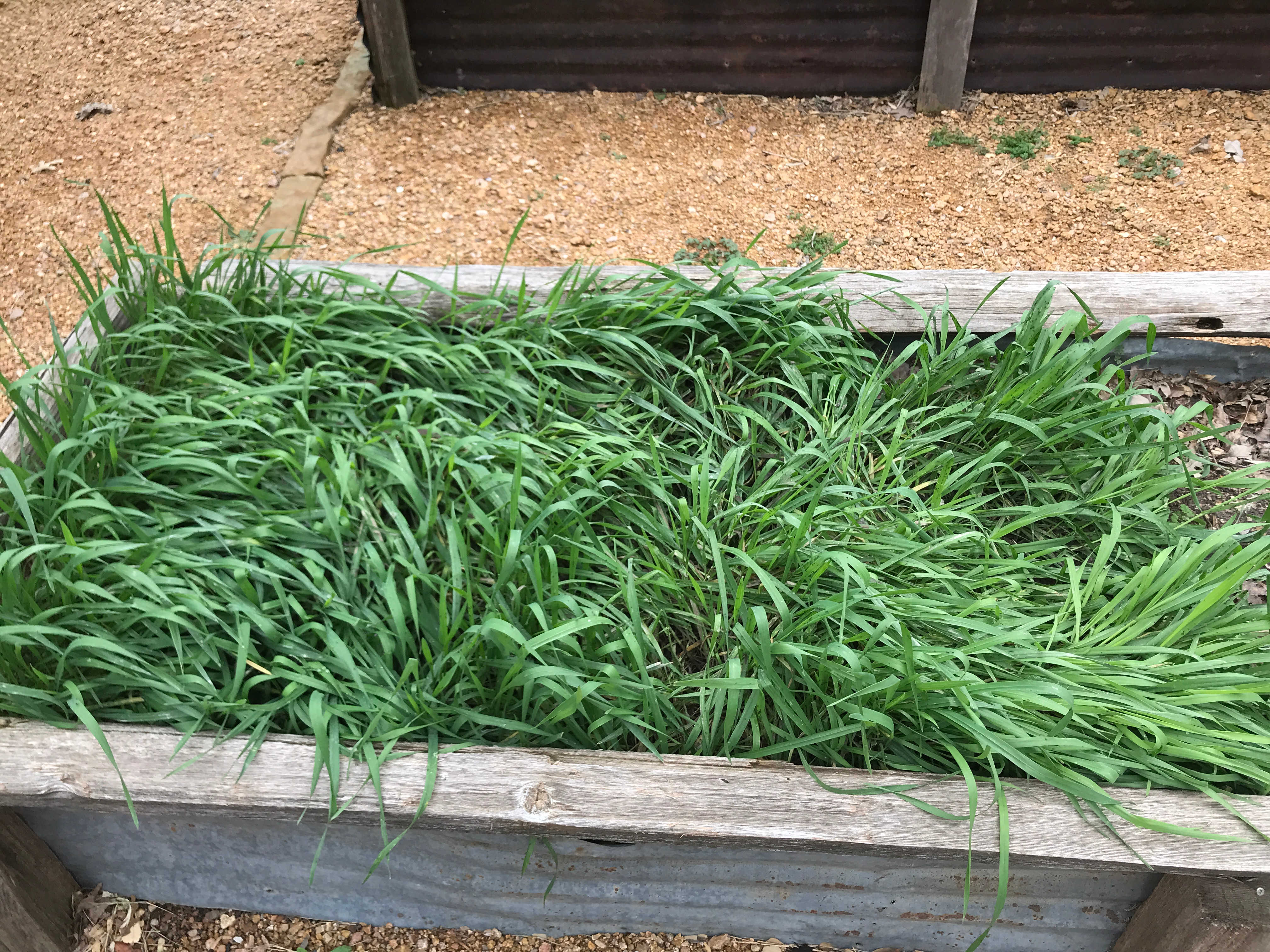
In February of 2023, I planted Triticumaestivum in a raised bed, not really expecting much in terms of yield. It was more or less a not so well planned out way to see how the crop would grow in my area of North Texas during the variable weather patterns of February and March.
To my surprise, Triticumaestivum took really well and showed promising growth within the first month of planting.
The weather conditions for February 2023 were typical of that for North Texas. The first and second week had freezing rain with temperatures 60F or below. By the third week temperatures were now reaching between 60F-70F, with some days having peak temperatures of 86F. Another cold front blew in on the fourth week, creating rain and temperatures between 39F to 46F that lasted for a few days. The final days of February were back up to temperatures as high as 82F.
The soil conditions remained unchanged during this trial. This crop was seeded directly on the surface and then covered with organic matter, primarily fallen leaves I found on the ground around the area. Nothing else was added or removed after planting.
The soil itself is what's called a Vertisol. They are characterized with a >30% clay content, visually appearing has a darker colored soil. Due to the high clay content, Vertisols are unique in that they experience a shrink and swell upon wetting and drying. In general, these expansions and contractions are a primary concern when trying to utilize Vertisols for agronomic purposes which in this instance is crop production. Reviewing literature on the topic, it is said that since the high clay content creates slow permeability, this would make Vertisols desirable for cropping systems that require retention of surface water. Dryland grain production is common on Vertisols in semiarid climates. This may explain why the crop took so well, despite the dramatic change in weather conditions.
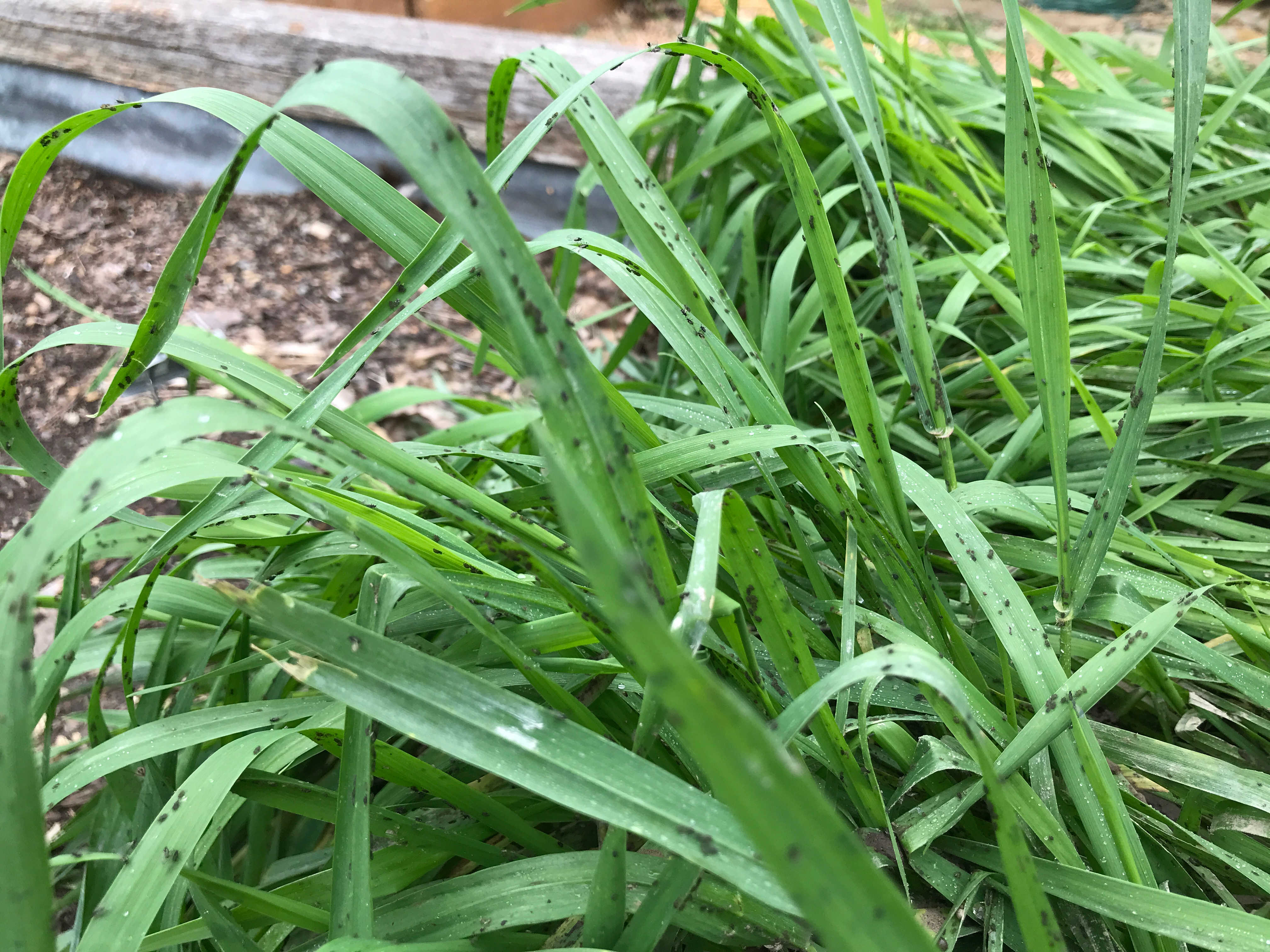
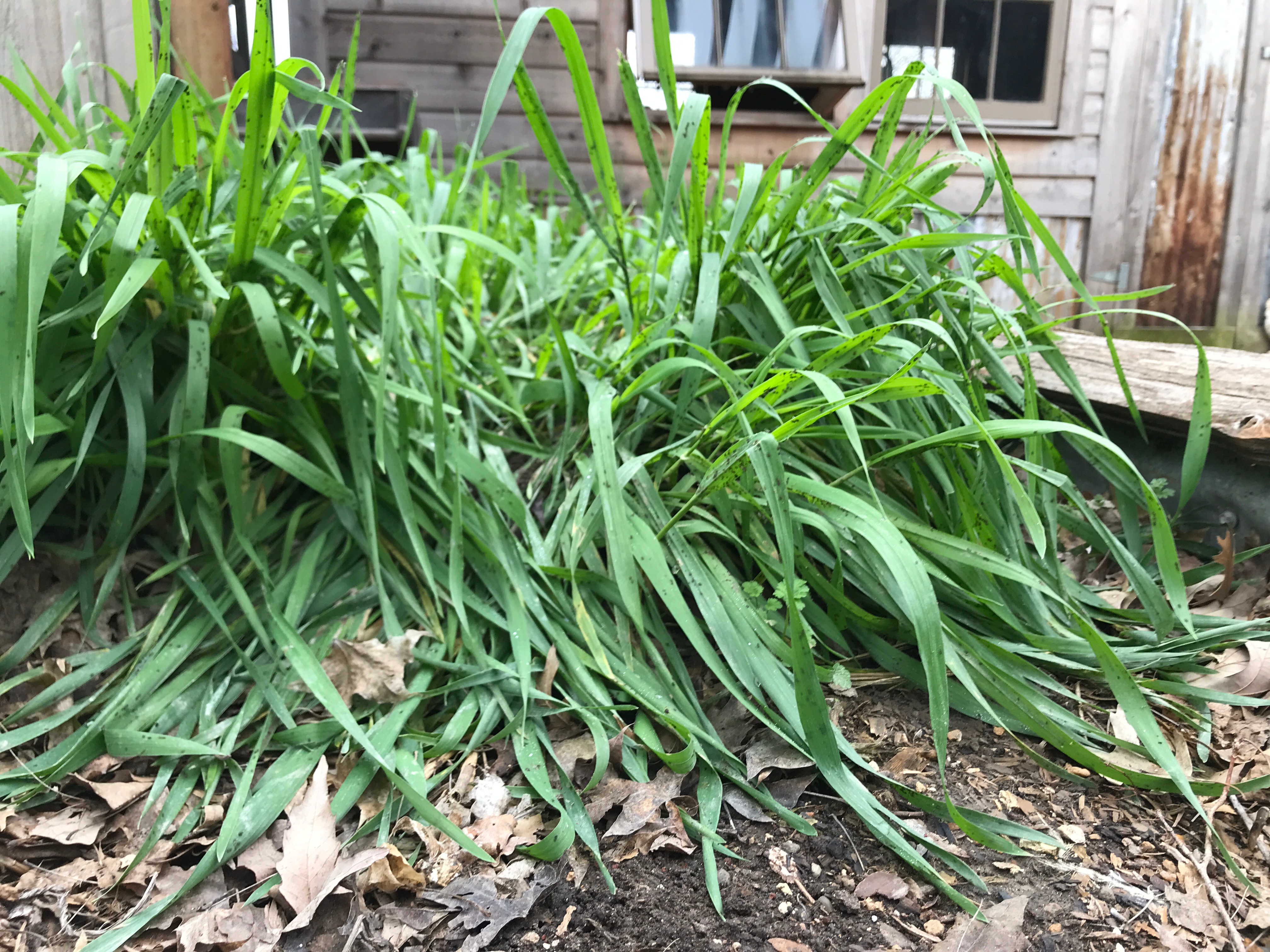
Now for the subject at hand. In early March, I would come home from university on weekends and notice that the Triticumaestivum was starting to droop. At first I thought maybe the rapid change in temperatures had finally done damage and caused injury to the crop. Upon closer inspection, I found that there were hundreds of identical insects all over the leaves.
I had no idea what exactly these insects were. They all looked the same to me. I did notice that there was another type of insect flying around, which I believe was different from the ones occupying the leaves.
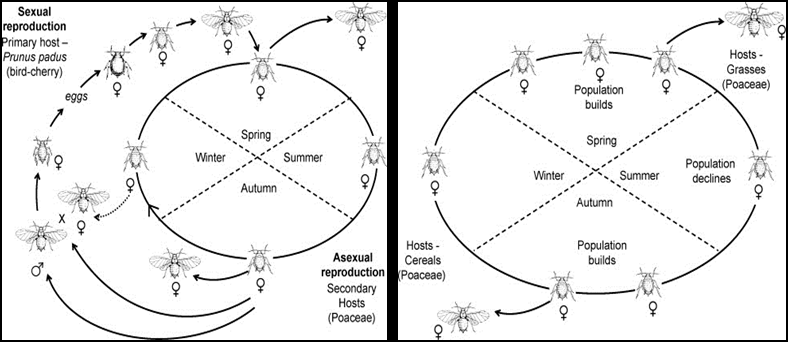
At a total loss of what I was witnessing, but suspecting they were the cause for why my crop was showing signs of injury, I cut a leaf with a few specimens to view under my microscope. Through the use of the internet and close up images, I determined that both the flightless insects occupying the leaves and insects flying around were Rhopalosiphumpadi. How they came to establish population on a small patch of Triticumaestivum is up for speculation. I live in a mostly urbanized area, with no commercial crop production in a 20 mile radius.
One thing was certain, the crop would not survive to yield. With each passing day the symptoms of injury became worse. I attempted to control the aphid population by applying diatomaceous earth in liberal amounts all over the crop, but to no effect. I read online about individuals trying to spray the aphids off with lots of water, but that did not work either. Using pesticides was out of the question. It's just not something we use for a variety of reasons.
After concluding that the aphids had won, I decided to destroy the Triticumaestivum. This was accomplished by pulling the crop out of the soil and letting it dry for a couple of days. Then, I burned the pile of dried crop with a propane torch to eliminate the aphid population and to prevent further spread.
/ag/ is for the discussion of all things agriculture related. Topics can range from animal husbandry to agronomy. Site wide rules are in effect. There are no board specific rules.
Reflecting on this series of events, I began to understand how grim our world would be if it were not for pesticides, genetically modified crops, and integrated pest management systems at large.
Attempting to grow a relatively easy crop like Triticum aestivum, only to have it be ravished by pests before maturity really put into perspective how necessary to our survival the above mentioned are. I would feel confident in stating that humanity could easily lose 40-50% of our cultivator crops before yield if we did not have pesticides or genetic modification.
That being said, I do acknowledge the negative environmental impacts of pesticide applications. I agree that pesticides should be heavily regulated and any misuse should be addressed by the State. There is also the fear that we may unintentionally create pesticide resistant populations of pests.
Unfortunately, we are set on this path. With a population that is growing exponentially, and a food supply that grows linearly, ensuring that food is in surplus and affordable means we have to resort to pesticides and GMOs. Any alternative would mean civil unrest and a societal collapse.